Articles
Orange Knight Media publishes articles on various topics of interest. Be sure to share them on you social media platforms.
What went wrong with kurtzman-era star trek?
July 2, 2026
by Thomas W. Pohl
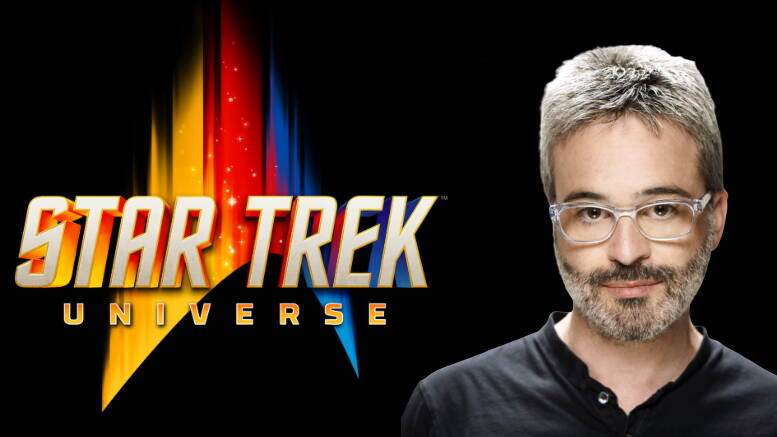
Alex Kurtzman, head of the Star Trek Universe (2017-2026)
Introduction
This article is my honest assessment of the Kurtzman-Era of Star Trek (a.k.a. NuTrek). This article is not intended to bash this era or to blindly support it. It is meant to take an honest look at why it mostly failed and will likely end very soon. I will assess both the Kurtzman-Era overall and each show in the era individually.
Alex Kurtzman Was Not the Guy to Lead Star Trek.
While he was a writer for the Kelvin universe Star Trek movies (“Star Trek” (2009), “Star Trek: Into Darkness” and “Star Trek Beyond”), his writing partner, Roberto Orci, was the real Star Trek fan in that duo. Kurtzman really didn’t seem to get Trek. He brought a lot of elements from the Kelvin universe films over to NuTrek. His often blatant disregard for established canon angered most long time fans. The bad writing didn’t help either. His forced shoehorning of liberal/progressive ideologies, messaging and at times, preaching at fans, turned off a lot of long time fans who did not share the same personal beliefs, and they were not shy about letting everyone know about it. The casting of failed Democratic gubernatorial candidate Stacey Abrams of Georgia as the Federation President was a prime example of this. DEI was in full bloom as there seemed to be a plethora of mixed species individuals. Kurtzman even said that his goal with NuTrek was to attract new fans to Star Trek. In doing so, he alienated a long established, and very passionate, fan base who pushed back hard. That was just a really bad decision on his part, as well as bad marketing. In the age of social media, this is especially bad because a bad reputation can be earned even before a show airs.
Another poor strategy was being too narrowly focused on certain demographics. Kurtzman had said in interviews that specific shows were produced with specific demographics in mind. While it may have sounded good in theory at the time, time would prove this theory to be flawed. It is bad marketing to limit your potential audience. Networks and studios care about ratings and viewership above all. That, in conjunction with the exorbitant amount of money Kurtzman spent on each episode (upwards of $10 million), had an impact on studio decisions. Ratings/Viewership vs. Monetary Investment is how studios make decisions whether to produce, not produce or cancel a show or movie. With Starfleet Academy for example, the studio simply did not get enough viewership for the amount of money that was spent on it. It turned out to be a poor investment of studio resources. While many Gen Z viewers loved the show, the narrow demographic focus on their generation simply did not appeal to most fans that were not of that generation. As it turned out, the non-Gen Z Star Trek fans greatly outnumbered the newer Gen Z fans, and were more boisterous about their complaints concerning Starfleet Academy and NuTrek in general. Again, this is an example of the flaws of limited demographic appeal and Kurtzman’s lack of understanding about Star Trek in general and its passionate fanbase.
Star Trek: Discovery – A Flawed Journey of Redemption
Discovery had a number a flaws right off the get go. Setting the show in the 23rd-Century was a mistake. It created too many opportunities to step on canon, which Kurtzman did. The primary example being making Michael Burnham Spock’s adopted sister. Nowhere else in the franchise had Spock ever had a sister.
The spore drive technology on the USS Discovery was way too advanced for the 23rd-Century! If the show had been set in the 32nd-Century from the get go, it would have been more believable. The biggest cause of outrage from the fanbase was the redesign of the Klingons. The Klingons are one of the oldest and most well-known alien races in the Star Trek franchise, having debuted in “Star Trek: The Original Series” back in the late 1960’s. The new makeup design used for them in Discovery gave the Klingons a completely different look. Before you say TOS Klingons don’t look like TOS Movie and TNG Klingons, you need to remember, TOS was limited by very tight budget restrictions and the limited makeup technology of the day. When “Star Trek: The Motion Picture” was being produced, it had a big movie budget, and makeup technology had advanced a great deal since TOS. Gene Roddenberry had even stated that the Klingons in TMP were closer to his original vision for the look of the Klingons.
The show did a poor job at character development for its bridge crew. Most people couldn’t even tell you what half of their names were. They were utterly forgettable characters. You just didn’t care about them. That’s just an example of bad writing that would plague NuTrek. The writing was too focused on Michael Burnham, and a lot of fans had a problem with that too. It was less like an ensemble cast than previous Trek shows had been, but I think some of that may have been intentional. After watching the entire series and then going back and starting to watch Season 1 again, you will realize that the entire series is Michael Burnham’s redemption arc. When she was nearing her time to step into a Captain’s chair, she makes a decision that she feels is right in her gut and wouldn’t let anyone stop her “because she knew she was right”. However, that decision blew up in her face big time! It started the Federation-Klingon War, and she paid a heavy price for her mistake. The rest of the series was about her path to redemption and eventually earning that Captain’s chair.
The show did get better once they jumped to the 32nd century. While it may have looked cool, those 32nd -century Starfleet ships made no logical sense design wise. Did Discovery have any science consultants like the TNG-era did? It doesn’t seem so. The whole idea of disconnected warp nacelles is illogical. An Electromagnetic Pulse (EMP) would easily cause the energy binding the nacelles to the hull to fail. You would then have a ship with no engines and totally vulnerable to an enemy attack. This real-world technology has been around since the mid-20th century. Shouldn’t science-fiction writers have some sort of clue about real world science, or at least consult with people who do?
While the Burn was a cool mystery at first, its premise fails in the end after more careful examination. Even if it was believable that all Dilithium exploded everywhere simultaneously, the aftermath shouldn’t have been the loss of faster than light travel. What happened to the quantum slipstream technology that Voyager brought back from the Delta Quadrant all the way back in the late-24th century? Surely it would have been perfected by the 32nd century, if not much earlier! What about the stolen Borg transwarp technology Voyager also brought back from the Delta Quadrant? Surely the Starfleet Corps of Engineers could have reversed engineered the technology by the 32nd century! This is another example of the writers ignoring established canon. Even if you disregard the previous two arguments, at a time of such crisis as the Burn wouldn’t Starfleet go through all of its research and classified files in search of a solution to the loss of warp drive? Don’t you think they would have pulled the spore drive technology out of its hiding place, and utilized it, no matter how classified it might have been until that time? These are just examples of a lack of knowledge of canon, or a blatant disregard of it. Not to mention a lack of logical thinking. Again, bad writing. The source of the Burn was utterly ridiculous and totally lacked credibility! The Burn was caused by a child’s tantrum?! Give me a break! This was another example of bad writing ruining something that held promise.
While Discovery did have some great moments, Anson Mount’s performance as Captain Christopher Pike, the Control arc with its deeper dive into Section 31, even fleshing out the mirror universe, which I hated in DS9, into something likeable, and the Species 10C arc are among examples. However, the bad outweighed the good in this series overall. This is why “Star Trek: Discovery” was cancelled after just five seasons, instead of the traditional seven.
Star Trek: Strange New Worlds – Started Good, Then Went off the Rails
“Star Trek: Strange New Worlds” (SNW) started life as a fan-based call for a “Captain Pike show” after Anson Mount’s well received performance as Captain Christopher Pike in Season 2 of “Star Trek: Discovery”. The show started off well and was well received by established fans. Introducing the Gorn, whom we knew little about in established canon outside of one episode of TOS, as the protagonist and making them a menacing threat in a similar vein to the Xenomorphs from the “Alien” franchise went over well. Giving Number One her featured role that was denied by studios executives during TOS’s development in the 1960’s felt right. Having an Aenar chief engineer in Season 1 was a nice nod to “Star Trek: Enterprise”. Casting comedic actress Carol Kaine as his replacement, was puzzling at the time and seemed like a bad casting decision. However, her character grew on me over time. It was also nice to see more character development amongst lesser TOS characters seen onscreen, such as Dr. M’Benga and Nurse Christine Chapel. It was nice to see the gradual introduction of established TOS characters such as Scottie and even Kirk while he was still assigned to the Farragut, although they did overuse him in my opinion. I loved the “what if” scenario in which Pike faced the Romulans during the “Balance of Terror” incident instead of Kirk, and how it went terribly wrong. Those Romulan ship designs were pretty cool too.
However, where SNW started going off the rails was when the writers and producers started experimenting with different genres. A fairy tale episode explained with a ridiculous premise. A musical that included Klingons singing boy band music. Explained by an even more ridiculous and unbelievable premise. This episode was widely loathed by most fans. However, if you take the music in isolation by itself, it was actually pretty decent, and I’m speaking as a former musician. The upcoming “puppet episode” in Season 4 was widely lambasted when first revealed. It had utter disaster written all over it by critics of the show. They, and I, don’t have much faith the writers could pull it off successfully. The only way I could see them pulling it of is if somewhere during the course of the dialog Pike angrily says, “I’m no one’s puppet!” and the camera cuts to the back of a bridge crew member with a familiar voice who says, “Oh really?”. He turns around and it’s Q, who gives a mischievous grin, snaps his fingers and turns the whole crew into puppets. Somehow, I doubt the writers are smart enough to think of something like this on their own.
Star Trek: Lower Decks – A Love Letter to TNG, with a Comedic Twist
“Star Trek: Lower Decks” (LD) was the first animated Star Trek series since “Star Trek: The Animated Series” (TAS) in the early 1970’s. While there was some initial trepidation amongst fans for an animated comedy series from the writer of Nickelodeon’s “Rick and Morty”, their concerns were soon placated. Showrunner Mike McMahan was a hardcore Trek fan and it showed! LD was his love letter to TNG. LD basically continued where TNG/DS9/VOY left off in the late 24th century, but from the perspective of lower ranked crew members of the USS Cerritos. Established fans loved it! McMahan intentionally put easter eggs in every episode to see if established fans could find them. He featured a one-off character from TNG, an Exocomp, and turned it into a comedic evil genius named Peanut Hamper. He revisited an episode of TOS to check up on what happened after Kirk’s crew left the planet (not good). He cast recurring Star Trek actor Jeffery Combs, who was best known for his roles as Weyon in DS9 and Shran in ENT, as a new evil sentient computer character. He canonized the previously Beta Canon USS Titan (NCC-80102) from the novels and had Jonathan Frakes and Marina Sirtis reprise their famous characters in the roles they had in the novels. This was much to the delight of fans, and to the Titan’s creator Sean Tourangeau (go follow him on social media if you don’t already, he’s a great artist!) The only bad part of Lower Decks was that it was cancelled after only 3 seasons, far too early. This series was easily the best and most liked of Kurtzman-era Trek. The fact that Kurtzman had very little input in this show and a hardcore Trek fan was the showrunner showed.
Star Trek: Prodigy – A “Kids Show” with Broader Appeal
When Paramount announced the animated children’s show “Star Trek: Prodigy” (PRO) in partnership with Nickelodeon, many established fans feared it was strictly a kiddie show, and probably aimed at the under-10 demographic. Like some established fans, I gave it a fair chance. I was pleasantly surprised. The CGI animation visual style was absolutely gorgeous! Returning Voyager characters, Janeway, Chakotay and the Doctor, voiced by their original actors, was well received. The rag-tag bunch of young, escaped prisoners who had no idea what they were doing when they commandeered an experimental Starfleet starship was a unique premise. Discovery missed an opportunity to solve the problem of The Burn with the USS Protostar’s experimental engine. This was probably due to lack of coordination between the various series. Introducing the Voyager-A was a bonus too. I enjoyed this show overall. Too bad Paramount ditched the show after Season 1 by managed to sell the mostly completed Season 2 to Netflix. Netflix was given an option to greenlight a potential Season 3, but declined after Season 2 aired.
Star Trek: Picard – A Fan Favorite Character Returns & Nostalgia Galore!
“Star Trek: Picard” (PIC) saw the return of Patrick Steward to Star Trek and the role that made him famous. What made this series interesting was that each of the three seasons could have been standalone shows in themselves if looked at in its entirety. However, the show’s premise to showcase different aspects of Picard’s life. The show starts twenty years after the events in “Star Trek: Nemesis” in 3199. Season 1 delved into Picard’s trauma in the aftermath Data’s death in “Star Trek: Nemesis” and the failed rescue operation of the Romulans before their Sun exploded. Picard gets involved with a colony of synths and their fight for the right to exist. Picard succumbs to his Irumodic Syndrome and dies. However, his consciousness is transferred into a synth body. Jon DeLancie’s "Q" makes a welcome appearance in the Season 1 ending cliffhanger.
Season 2 deals with Picard being sent to an alternate universe where the Confederation, led by earth, has wiped out the Borg and holds the Borg queen captive. We are introduced to many new Starfleet starships, many of which are taken directly from the “Star Trek Online” video game. A new Borg ship is seen as well, and it’s shaped like a vagina? The Borg Queen here wants to join the Federation to help prevent a galaxy-level disaster from happening.
Season 3 is easily every long time fans favorite season. Showrunner Terry Matalas, who had previously written for VOY, put his love, and knowledge, of Trek on full display. The show was one huge nostalgia-fest. The entire TNG crew reunited throughout the course of the season. We saw the canon debut of the USS Enterprise (NCC-1701-F) from “Star Trek: Online”, piloted by Admiral Ro Laren, played by Michelle Forbes herself. We saw Geordi’s daughters. Picard and Crusher got together after all and had a son, Jack. We saw a bunch of Founders, who were the victims of brutal experiments during the Dominion War, try to extract revenge on the Federation. We saw the Borg’s long game against the federation, which had begun back in TNG when Picard was assimilated and became Locutus. We saw a Starfleet museum housing many of the most famous starships in Federation history, including the Doug Drexler’s upgraded Enterprise (NX-01) which never made it to the screen during ENT’s run. We see the restored USS Enterprise (NCC-1701-D) and it flies once again to save the day against a Borg Supercube. As a bonus, Terry Matalas perfectly set up a sequel series, dubbed “Star Trek: Legacy” by many, in the last episode. This would have featured Captain Seven of Nine, Commander Raffi, Jack and Georgi’s daughters aboard the newly renamed USS Enterprise (NCC-1701-G). Many fans clamored for this show to be made. There was even a fan campaign behind it. However, Kurtzman ignored the fans (once again) and gave us a show no one asked for.
Star Trek: Starfleet Academy – The Series No One Asked for, or Wanted
“Star Trek: Starfleet Academy” (ACD) had Alex Kurtzman’s fingerprints all over it. Instead of giving fans "Star Trek: Legacy" like they had been Clamoring for since the conclusion of "Star Trek: Picard", Alex Kurtzman doubled down on his middle finger to the established fanbase and gave them a "woke" show they didn't ask for, or wanted. Even before it had aired it was lambasted as “Star Trek: 90210” by many critics, claiming that it would be just another teen drama but taking place in the Star Trek universe. They were really wrong either. The idea of a Star Trek Academy movie had been floated about since the 1980’s and the idea had been consistently rejected by Paramount. I personally always hated the idea. I thought it was just a bad premise for a movie of a show. Kurtzman was definitely aiming this at a Gen Z audience, and they actually seemed to like it. The antagonist, played by the brilliant Paul Giamatti was easily the best part of the series, even if he was underutilized and the writers botched his character at the end (more bad writing!). The Academy’s Commandant, Chancellor Ake, spends the series mentoring a group of first years cadets through their teen drama. Ake’s actor, Helen Hunter, was not liked by many fans, who thought she wasn’t right for the role. Ake’s unusual casualness, especially while in uniform irritated a lot of fans. We saw her bare feet way too often! Did this woman even own a pair of shoes?! She would lounge in the captain’s chair barefoot and reading a book, while on duty! Totally unprofessional and totally unacceptable! That’s what the Captain’s Ready Room is for.
DEI was on full display too. Numerous mixed species individuals who seemed to outnumber pure blooded species at times, a gay Klingon wearing a skirt who is love with a gay Human male, a mixed species lesbian couple consisting of a Human and a half Klingon/half Jem'Hadar. All illogical choices that ignored established canon concerning these races. Apparently, Gen Z were the only ones watching this show as it bombed in the ratings. It was cancelled before Season 2, which had been mostly completed by then, had yet to air. There were even rumors for a time that Season 2 could be scrapped altogether and would never air. However, it seems it will air after all.
Star Trek: Section 31 – A Movie That Was Rushed and Bombed Big Time!
The "Star Trek: Section 31" movie had originally started life as a television series that would have featured Michelle Yeoh’s Empress Georgiou as a member of Section 31. However, before the show could be green lit, Michelle Yeoh won an academy award and was suddenly in high demand. The series kept on being pushed back because of her schedule and it was eventually decided to do a movie instead as Yeoh couldn’t commit to a full series. The movie was poorly written and very rushed due to Yeoh’s limited availability. While it was to nice to see some backstory about how a young Phillipa Georgiou became the Empress of the Terran Empire and to see a young Rachael Garrett, the movie was basically a poorly written James Bond film that takes place in the Star Trek Universe, and it was barely Trek at that. This movie bombed big time! In my opinion, it is even worse than “Star Trek V: The Final Frontier”, and that’s saying a lot! Many believe this disaster of a movie was the final nail in the Kurtzman-era and the reason Kurtzman's contract was not renewed by Paramount's new owners.
In Conclusion
The Kurtzman-era of Star Trek was mostly a failure for many reasons, while the bright spots were cut short or ignored completely. Who knows how much damage Kurtzman did to this beloved franchise. It is widely expected that Paramount will let his contact lapse when it ends in August 2026 and go in a different direction. Some of these plans have been in discussion for a while now, but nothing can be announced until Kurtzman’s contract ends.